news release - June 30, 2026
What if the infection can be stopped as soon as the mosquito bites?
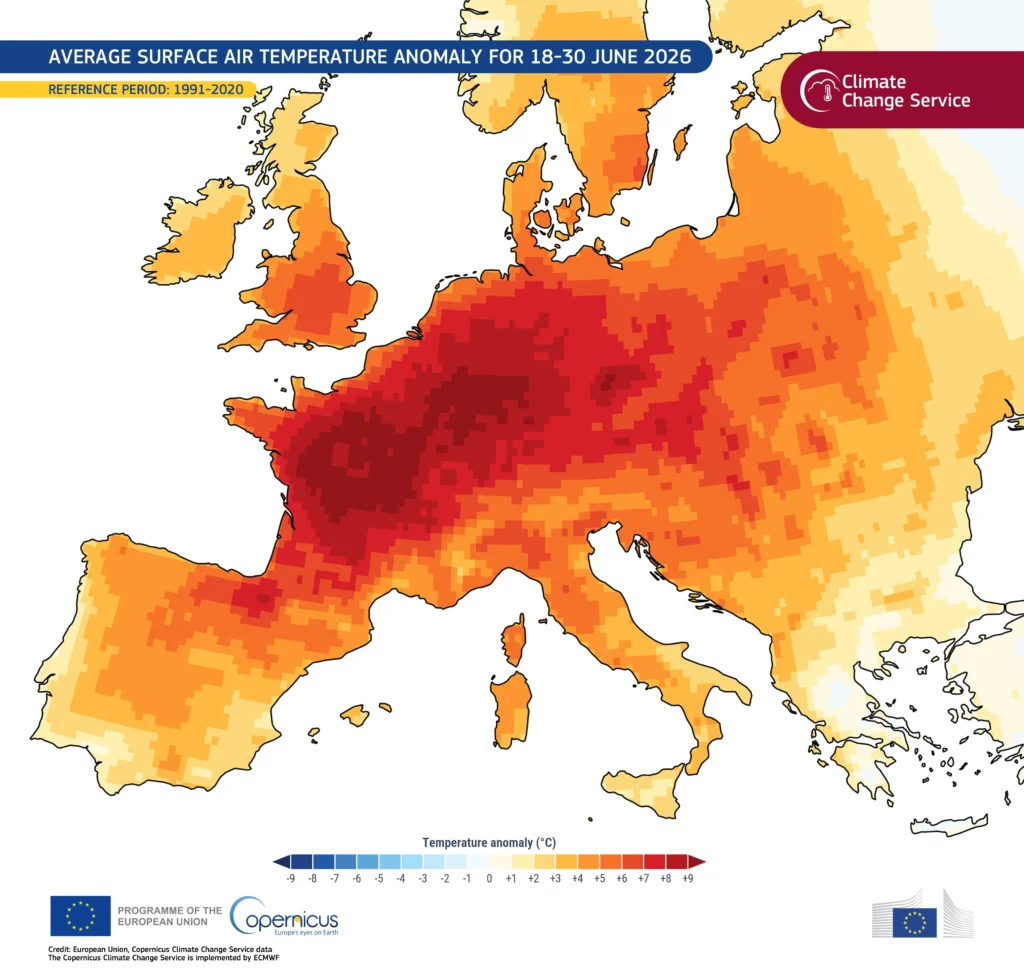
Mosquito-borne diseases are among the most persistent and complex public health challenges of our time. Every year, millions of people are exposed to viruses transmitted through mosquito bites, including dengue, Zika, yellow fever, West Nile diseases, and other flaviviruses. These diseases are not confined to one region of the world. Their spread is influenced by climate change, global travel, urbanisation and the expanding presence of mosquito populations in areas where they were once uncommon.
Vaccines remain one of the most powerful tools in the history of public health. They have transformed the way we prevent infectious diseases and protect communities. Yet, for several mosquito-borne viral diseases, vaccine development remains scientifically challenging. Flaviviruses are a diverse group of viruses, and building protection against them is not always straightforward. In some cases, the immune response needs to be understood with particular care, especially when different but related viruses circulate in the same regions.
This is where FLAVIVACCINE introduces a different way of thinking.
Instead of looking only at the virus itself, the project explores whether protection could also be built by focusing on what happens at the very first moment of infection: the mosquito bite.
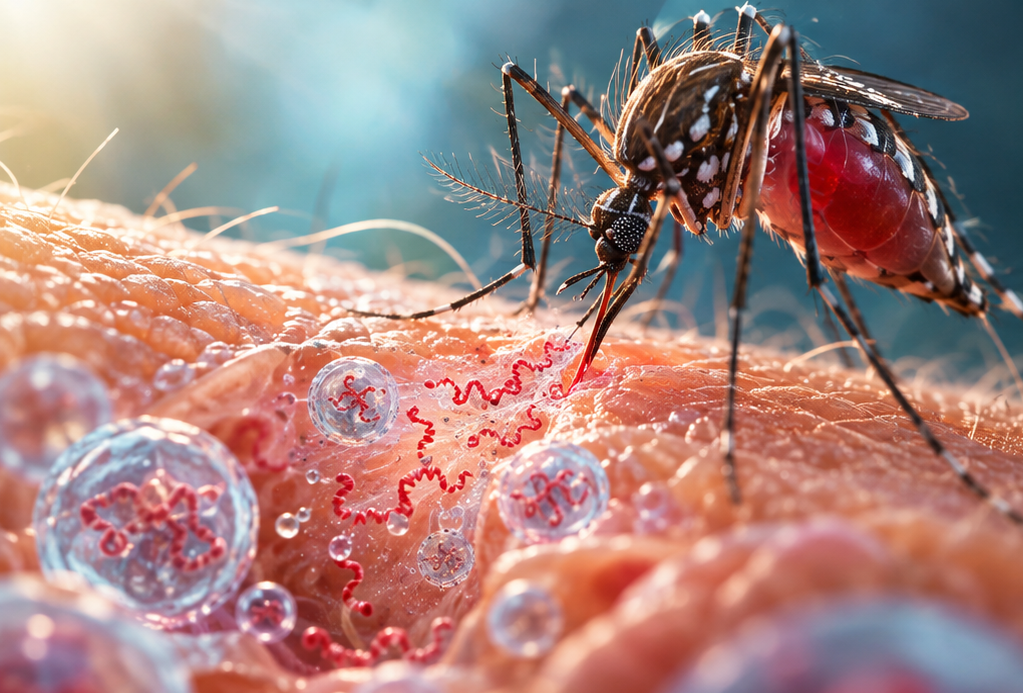
Looking at the first contact between mosquito, virus and human skin
When a mosquito bites, it does not simply inject a virus. The bite is a complex biological event. Mosquito saliva plays an active role in this process, helping the mosquito feed and shaping the local environment in the skin. For a virus transmitted by mosquitoes, this first interaction influences the infection success.
This means that the bite itself is not only the starting point of disease transmission. It is also a place where new prevention strategies can be imagined.
FLAVIVACCINE is built around this idea. The project investigates innovative vaccine approaches that look beyond traditional virus-targeting strategies and consider the role of mosquito-derived components involved in transmission. The ambition is not to replace existing scientific knowledge, but to open a complementary direction: one that studies the vector, the virus and the host response together.
In simple terms, the project asks a bold question:
Can we improve protection against mosquito-borne flaviviruses by targeting mosquito saliva?
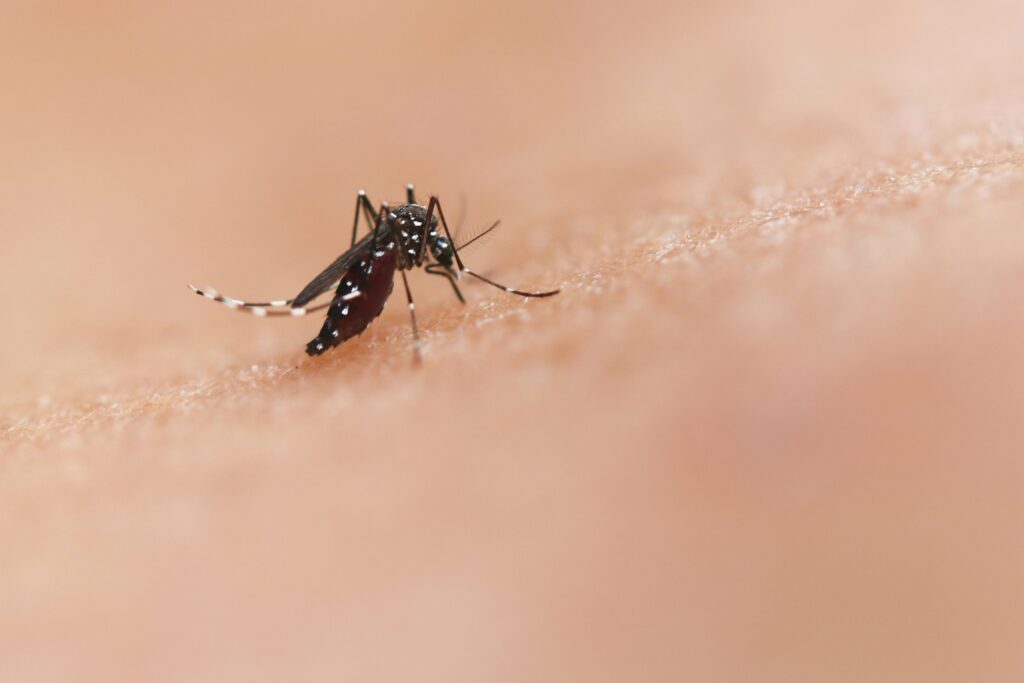
Photo by National Institute of Allergy and Infectious Diseases on Unsplash
Why this approach matters
Many vaccine strategies focus on training the immune system to recognise viral components. This has been, and continues to be, a central path in vaccine research. However, flaviviruses present specific challenges. They include several related viruses, and immune responses to one virus may not always translate into protection against another.
For researchers, this raises an important question: could complementary approaches help address some of these challenges?
By focusing on mosquito saliva components, FLAVIVACCINE explores a strategy that may support future vaccine innovation from a different angle. The project looks at the biological context in which transmission begins and studies whether this early environment can be used to inform new ways of protecting people.
This perspective is particularly relevant for diseases transmitted by mosquitoes, because the vector is not just a carrier. The mosquito is part of the transmission process. Understanding that process more deeply could help researchers identify new opportunities for prevention.
A project at the intersection of vaccine science and vector biology
FLAVIVACCINE brings together partners with expertise in virology, immunology, mosquito biology, vaccine development and public health-oriented research. This interdisciplinary approach is essential because mosquito-borne diseases do not belong to one field alone.
They are shaped by the biology of viruses, the behaviour and distribution of mosquito vectors, the immune response of the human body and the wider environmental and societal conditions that affect disease spread.
The project’s work reflects this complexity. It does not look at flavivirus prevention as a single-step challenge, but as a broader scientific question: how can we better understand the early stages of infection, and how can that knowledge support more innovative vaccine concepts?
This makes FLAVIVACCINE especially timely. As mosquito-borne diseases continue to create pressure on health systems, particularly in regions where outbreaks are frequent or expanding, the need for responsible innovation is growing. Public authorities, vaccine developers, researchers and clinical communities all need new knowledge that can support preparedness and future decision-making.
Rethinking where prevention begins
The mosquito bite is often seen only as the moment when infection starts. FLAVIVACCINE invites us to look at it differently: as a key biological interface where new scientific questions can be asked.
What happens in the skin when a mosquito bite introduces a virus? How does the mosquito contribute to the earliest stages of transmission? Could the immune system be prepared to respond not only to the virus, but also to elements involved in the transmission process?
These are the kinds of questions that make the project innovative.
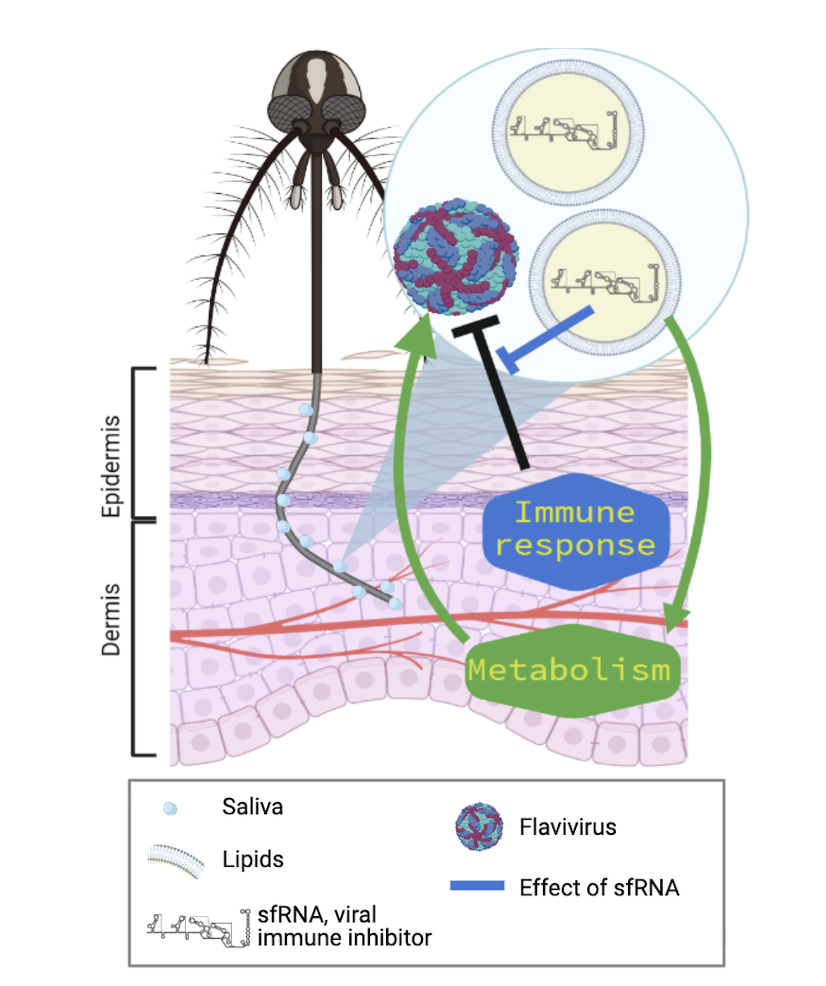
By focusing on the first steps of infection, the project contributes to a wider effort to rethink how we prepare for mosquito-borne diseases. It brings attention to the interaction between mosquito, virus and host, and explores how this knowledge could support future vaccine strategies.
For now, the starting point is clear: to better understand how to protect against mosquito-borne flaviviruses, we may need to start where transmission begins.
At the mosquito bite.